

Withdrawing from a Byzantine vault
Withdrawals are available at any time, allowing users to access their funds whenever needed.The integrator will have to call different API endpoints based on the authentication method used.
- Passkey
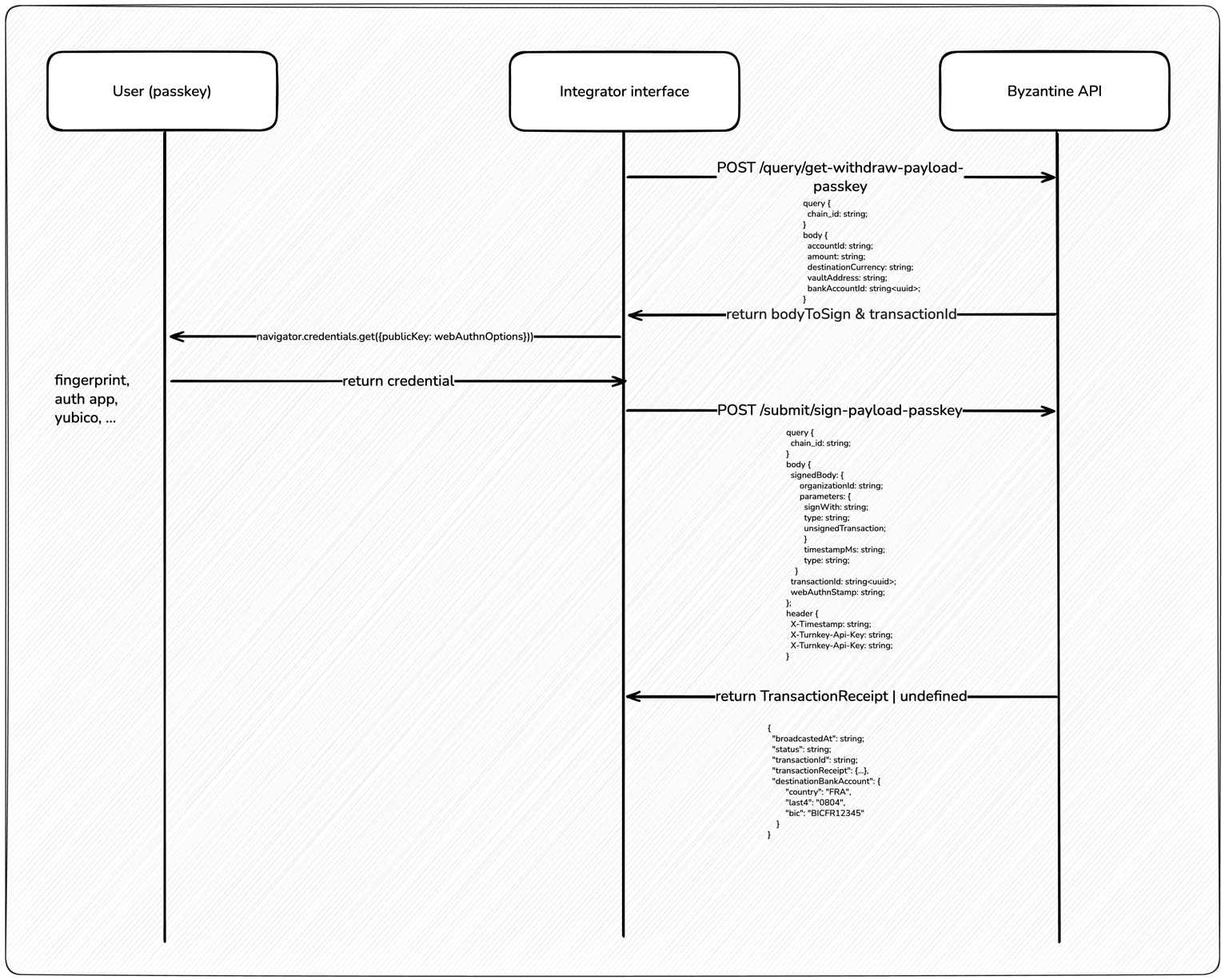
The withdrawal process follows the same two-step transaction pattern as deposits:
- Get withdraw payload, which requests the transaction body to sign.
-
Sign a payload (passkey), which submits the signed transaction.
Queued withdrawals
Not every vault can serve a withdrawal on the spot. Asynchronous vaults place the withdrawal in a queue instead of broadcasting it straight away. For those, Sign a payload answers202 Accepted rather than 200 OK, and the response carries a withdrawalRequest object:
Treat
202 as a success. The withdrawal has been accepted and signed; it simply has not left the vault yet. A transaction.withdrawal_initiated webhook fires at the same time.withdrawalRequest.status:
While a withdrawal is queued, the amount still sits in the vault and is reported separately under
pending_withdrawals on the account balance. See Idle balance.
Cancelling a queued withdrawal
A withdrawal can be cancelled for as long as it is stillpending. Cancellation is itself a signed action, so it follows the same two-step pattern as the withdrawal it cancels:
- Get cancellation payload for a withdrawal request - pass the
chain_idas a query parameter and thetransactionIdof the queued withdrawal in the body. It returns the body to sign. - Sign a payload - submit the signed body to execute the cancellation.
cancelled, withdrawalRequest.status becomes cancelled, and the funds remain in the vault.